This or That is a common English expression used to present two choices and ask someone to select one. It helps readers understand how to use demonstrative pronouns, demonstrative adjectives, and English grammar rules in everyday speaking and writing.
The word this usually refers to something near the speaker, while that points to something farther away or already mentioned. For example, “Would you like this book or that one?” shows how the expression compares two options.
Understanding the difference between this or that, this vs. that, and singular demonstratives can help you avoid common grammar mistakes. This article explains their meanings, key differences, correct usage, and practical examples to help you use these words with confidence.
Read Also : An or A: Meaning, Rules, Examples, and Usage!
This or That: Meaning and Definition
What Does “This or That” Mean?
“This or that” is an English expression used to present two choices and ask someone to choose between them. It helps people compare options, express preferences, and make decisions in everyday conversations.
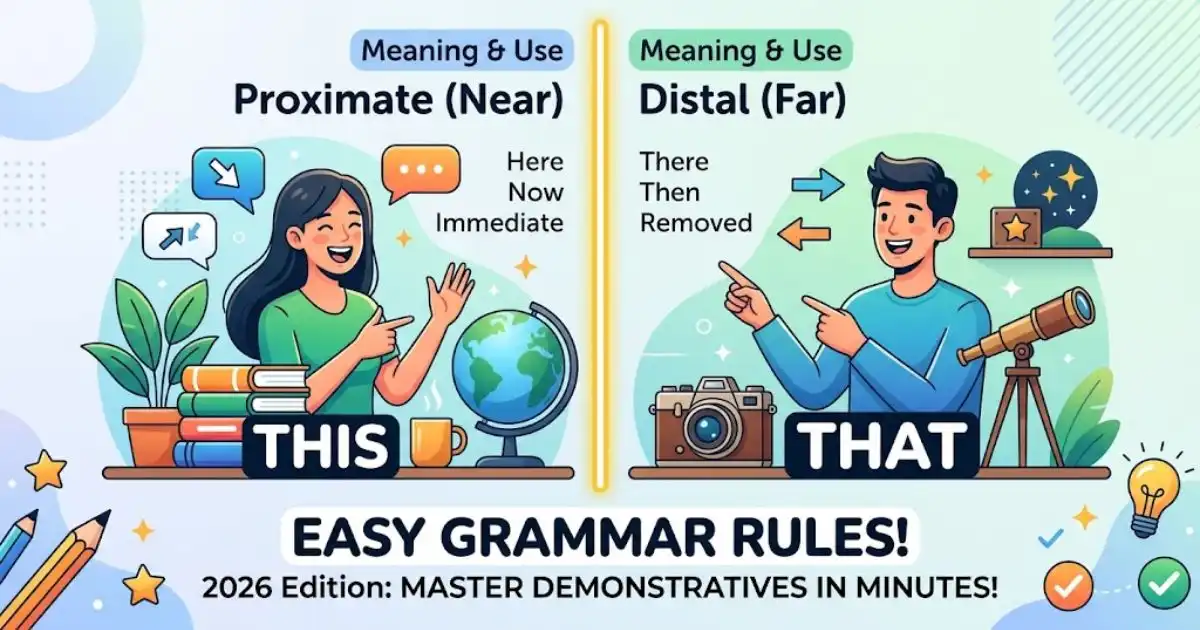
The word this usually refers to something near the speaker or something being discussed now. The word that often refers to something farther away or something already mentioned. Together, they help identify and compare two different things.
Examples of “this or that” in sentences:
• Would you like this shirt or that shirt?
• Should we watch this movie or that movie tonight?
• Do you prefer tea or coffee? This is a similar choice-based question, although it does not use the exact phrase.
The expression also appears in This or That questions, a popular activity in which people choose between two options to share their tastes, opinions, or interests. Friends may use these questions as a conversation starter, while teachers can use them for English language practice.
Is “This or That” Grammatically Correct?
Yes, “this or that” is grammatically correct when it connects two choices or refers to alternatives. The conjunction or presents the options, while this and that identify them.
For example, “Would you like this or that?” is a correct question when the choices are clear from the situation. However, the expression may need additional words to make the meaning clear in formal writing.
Compare these examples:
• Correct: “Would you prefer this option or that option?”
• Correct: “I cannot decide between this and that.”
• Correct: “Are you choosing this one or that one?”
The choice between this or that and this and that depends on meaning. Use or when presenting alternatives. Use and when referring to both things together.
This vs. That: Key Differences
The main difference between this and that is the distance or connection between the speaker and the thing being discussed. Both words are demonstratives, which means they help identify specific people, objects, ideas, or situations.
Use this for something near you, something happening now, or an idea you are introducing. Use that for something farther away, something already mentioned, or an idea you want to refer back to.
For example:
• This is my notebook. (The notebook is nearby.)
• That is your notebook. (The notebook is farther away.)
• This is a useful idea. (You are introducing the idea.)
• That was a good suggestion. (You are referring to a suggestion already discussed.)
Distance is not always physical. Speakers also use these words to show time, attention, and context. The surrounding sentence helps determine which word is appropriate.
This vs. That Comparison Table
| Feature | This | That |
| Basic meaning | Refers to a near person, object, or idea | Refers to a more distant person, object, or idea |
| Physical distance | Usually near the speaker | Usually farther from the speaker |
| Time reference | Often refers to the present or near future | Often refers to the past or a more distant time |
| Conversation | Introduces a topic or current idea | Refers back to a topic or earlier idea |
| Singular or plural | Singular | Singular |
| Plural form | These | Those |
| Example | This book is interesting. | That book is interesting. |
Quick rule: Use this for one thing near you and that for one thing farther away. Remember that context can affect the choice, especially when discussing time or ideas.
This, That, These, and Those
This, that, these, and those are the four main demonstrative words in English. They identify specific people, objects, or ideas based on distance and number.
| Word | Number | Typical use | Example |
| This | Singular | One thing nearby | This apple is fresh. |
| That | Singular | One thing farther away | That apple looks ripe. |
| These | Plural | Multiple things nearby | These apples are fresh. |
| Those | Plural | Multiple things farther away | Those apples look ripe. |
Remember these simple rules:
• Use this and that with singular nouns, such as this chair and that house.
• Use these and those with plural nouns, such as these chairs and those houses.
• Use this and these for things considered near.
• Use that and those for things considered farther away.
These words can also refer to ideas rather than physical objects. For example, “This is what I mean” introduces an explanation, while “That is what I meant yesterday” refers to an earlier point.
Learning these demonstrative words together makes it easier to understand their singular and plural forms and avoid common English grammar mistakes.
Read More: Advice or Advise: Meaning, Difference, and Examples!
Grammar Rules for Using This and That
Correctly using this and that depends on whether you are identifying a noun, replacing a noun, or referring to time, distance, or an idea. The most important rule is to match the word to the meaning you want to express.
For example, use “this book” when identifying a nearby book and “that book” when identifying a more distant one. When the noun is already clear, you can simply say “this” or “that.”
The following rules explain how these words function in different sentence structures.
Demonstrative Pronouns vs. Determiners
The words this and that can function as demonstrative pronouns or demonstrative determiners. Their grammatical role depends on how they are used in a sentence.
A demonstrative determiner comes before a noun and helps identify it.
Examples:
• This phone belongs to me.
• This idea could solve the problem.
In these sentences, this and that identify specific nouns: phone, building, and idea.
A demonstrative pronoun stands in place of a noun or noun phrase.
Examples:
• This belongs to me.
• This could solve the problem.
Here, the words identify things without directly preceding their nouns.
How to remember the difference:
• If this or that comes directly before a noun, it usually functions as a determiner.
• If it stands alone in place of a noun or noun phrase, it functions as a pronoun.
Both uses are grammatically correct. Choosing the right form helps you write clear sentences, avoid repetition, and communicate your meaning accurately.
Using This and That for Time and Distance
The words this and that can express more than physical distance. They can also refer to time, events, experiences, and ideas. The correct choice depends on the context and the speaker’s point of view.
1. Physical distance
Use this for something nearby and that for something farther away.
• This bag is mine.
• That building belongs to my uncle.
2. Present and past time
Use this for a current period or an event connected to the present. Use that when referring to a more distant or completed time, depending on the context.
• This morning, I had an important meeting.
• That day, we learned an important lesson.
Both examples are correct. The choice depends on how the speaker views the time being discussed.
3. Ideas and conversations
Use this to introduce or explain a point. Use that to refer to something already mentioned or understood.
• This is the main reason I disagree.
• That makes sense now.
4. Events and experiences
These words can also point to events or experiences.
• This is an exciting opportunity.
• That was an unforgettable trip.
The key is to consider meaning, context, and reference rather than relying only on physical distance. Once you understand these patterns, you can use this and that correctly in everyday conversation, academic writing, and other forms of English communication.
Easy Memory Trick for This vs. That
THIS Means Near, THAT Means Far
The easiest way to remember this vs. that is to think about distance. Use this for something near you and that for something farther away. This simple rule works for objects, people, and many everyday situations.
• THIS = Near: “This cup is mine.” The cup is close to you.
• THAT = Far: “That house is beautiful.” The house is farther away.
You can also remember their plural forms: these means near, while those means far.
| Near | Far |
| This book | That book |
| These books | Those books |
Remember that distance can also be mental or related to a conversation. Use this to introduce an idea and that to refer to a point already mentioned. Context helps you choose the correct word.
Language Usage and Grammar Tips
Using this and that correctly becomes easier when you understand how these words work in sentences. Both can identify objects, describe situations, and refer to ideas. Your choice depends on the meaning you want to express.
British vs. American English
The basic grammar rules for this and that are the same in British English and American English. In both varieties, this usually refers to something near the speaker, while that often refers to something farther away or previously mentioned.
Examples used in both varieties include:
• “This is my favourite book.” (British spelling)
• “This is my favorite book.” (American spelling)
• “That shop is closed.” (British English)
• “That store is closed.” (Common American English wording)
Differences such as favourite and favorite relate to spelling, while shop and store reflect common vocabulary choices. They do not change the core meaning of this and that.
Quick Tips for Choosing This or That
Use these practical English grammar tips to choose the correct word:
• Choose this for one person or object that is near you.
• And Choose that for one person or object that is farther away.
• Use these for multiple nearby things.
• Those for multiple distant things.
• Use this when introducing a current idea or situation.
• That when referring to something already discussed, when it fits the context.
For example, say “This question is easy” when pointing to a question in front of you. Say “That question was difficult” when referring to a question from an earlier discussion.
Read More: Lefty or Leftie: Which Spelling Is Correct in US English?
This vs That: Comparison Table
The following table summarizes the main differences between this and that, including their plural forms and common uses.
| Grammar Feature | This | That |
| Meaning | Near or connected to the current situation | Farther away or previously mentioned |
| Number | Singular | Singular |
| Plural form | These | Those |
| Before a noun | This car is new. | That car is old. |
| Used alone | This is mine. | That is yours. |
| Time example | This week is busy. | That week was busy. |
| Idea example | This is my point. | That is a good point. |
Key takeaway: Both words identify specific things, but they often differ in distance, time reference, and conversational context. Use the surrounding sentence to decide which word communicates your meaning most clearly.
Common Mistakes with “This or That”
Many learners confuse this and that because both words refer to specific people, objects, or ideas. The following common errors explain how to avoid incorrect usage.
1. Using “This” for Far Objects
Using this for a distant object can confuse readers or listeners when physical distance matters.
Incorrect: “This mountain over there is very high.”
Better: “That mountain over there is very high.”
Use this when the object is near you. Use that when it is farther away. However, speakers may use this for something distant when they are treating it as the current focus of attention, so context also matters.
2. Using “That” for Near Objects
Using that for a nearby object may sound unnatural when you are pointing directly to something close to you.
Incorrect in the intended context: “That pen in my hand is blue.”
Better: “This pen in my hand is blue.”
Use this for a nearby object and that for a more distant one. The choice can change when the speaker’s point of view or conversational focus changes.
3. Confusing Time Reference
Another common mistake is choosing this or that based only on whether an event happened in the past or present. Time expressions depend on context, not just a fixed rule.
For example:
• “This morning, I finished my homework.” This is natural when the morning is viewed as part of the current day.
• “That morning, I finished my homework.” This is natural when describing a particular morning in a story or past event.
Both sentences are grammatically correct. The important difference is how the speaker frames the time. Use this for a period connected to the current situation and that for a period viewed as more distant or separate.
Read More: TubeHalote Meaning: Definition, Origin, and Examples!
Easy Memory Trick (Mnemonic)
Remembering this vs. that is easy with a simple mnemonic. Think about whether something is close to you or farther away.
THIS = “T” for Touch
Use this for something near you that you could touch or point to easily.
• Example: “This phone is mine.”
• Why it works: The phone is close to you, so this is the correct choice.
THAT = “A” for Away
Use that for something farther away from you.
• Example: “That building is tall.”
• Why it works: The building is away from you, so that fits the sentence.
Quick reminder: THIS = Touch and THAT = Away. For plural nouns, use these for nearby things and those for distant things.
This or That Questions for Friends
This or That questions help friends learn about each other’s preferences and start fun conversations. You can use them during hangouts, road trips, parties, or online chats.
• Coffee or tea? Discover your friend’s favorite drink.
• Beach or mountains? Find out their ideal vacation spot.
• Movies or video games? Compare favorite ways to relax.
• Pizza or burgers? Settle a friendly food debate.
• Early mornings or late nights? Compare daily routines.
• Texting or calling? Learn how your friends prefer to communicate.
This or That Questions for Kids
This or That questions for kids make learning English enjoyable while encouraging children to express their choices. Keep the questions simple, familiar, and age-appropriate.
• Cats or dogs? Which pet would you choose?
• Ice cream or cake? Pick your favorite treat.
• Superman or Spider-Man? Choose your favorite superhero.
• Summer or winter? Which season do you like best?
• Drawing or coloring? Choose your favorite activity.
• Dinosaurs or dragons? Pick the creature you find more exciting.
These questions also help children practice speaking skills, learn new words, and form complete sentences, such as “I choose ice cream because it is sweet.”
This or That Questions Funny
Funny This or That questions add humor to conversations and encourage people to make silly choices. They work well with friends, family, classmates, and social media followers.
• Talking cats or dancing dogs? Choose your funniest companion.
• Smelly feet or stinky breath? Pick the lesser evil.
• Wearing pajamas everywhere or wearing a suit to bed? Choose your unusual style.
• Eating pizza with a spoon or soup with a fork? Decide which food challenge sounds worse.
• Laughing like a chicken or walking like a penguin? Pick your comedy move.
• Having spaghetti for hair or marshmallows for teeth? Choose your strangest look.
These playful choices make conversation games more entertaining and help people share their sense of humor.
Read More: Treck Or Trek: Which Word Is Correct? What’s The Difference?
Real-Life Usage Examples
The words this and that appear in everyday communication, from emails and social media posts to news reports and academic papers. Their meaning depends on the object, idea, or situation being discussed.
Email Writing
In professional emails, use this to refer to a current matter or something you are presenting. Use that to refer to a point already mentioned or a matter viewed as separate.
• This: “Please review this document before the meeting.”
• That: “Thank you for explaining the issue. That suggestion sounds helpful.”
Social Media
On social media, this and that often help users point to content, share reactions, or refer to previous posts.
• This: “This photo deserves more attention!”
• That: “Remember that trend from last summer?”
News Headlines
In news headlines, this may highlight a current event, while that can refer to a previously mentioned event or a specific subject.
• This: “This New Policy Could Change Local Transport.”
• That: “Why That Decision Sparked Public Debate.”
The choice depends on the headline’s context and intended meaning, not simply whether the event is recent.
Academic Writing
In academic writing, demonstratives help connect ideas and refer to evidence, findings, or arguments. Clear references are important so readers understand which information the writer means.
• This: “This study examines the effects of sleep on memory.”
• That: “The earlier experiment produced similar results. That finding supports the hypothesis.”
For greater clarity, avoid using this or that without making the intended reference clear.
Business Communication
In business communication, both words help make instructions, presentations, and reports more precise.
• This: “This proposal outlines our revised marketing plan.”
• That: “That approach may reduce operating costs.”
Choose the word that best matches the context and the point you want to emphasize.
Read More: A Hour Or An Hour: Which One Is Correct? With Examples!
Language Trends & Usage Notes
The basic rules for this and that remain consistent across different varieties of English. However, everyday expressions, vocabulary choices, and communication habits can affect how people use these words.
British vs American English
The core grammar rules for this and that are the same in British English and American English. Both varieties generally use this for something near the speaker and that for something farther away or already mentioned.
• British English: “This is my favourite colour.”
• American English: “This is my favorite color.”
The spelling of favourite and favorite differs, but the use of this does not. Regional vocabulary may vary, yet the main distinction between this and that stays the same.
Modern Usage Trends
In modern English, this and that are common in texting, online discussions, workplace messages, and digital content. People also use them to refer to ideas, opinions, and shared experiences rather than physical objects.
• Online conversations: “This is exactly what I mean.”
• Social media reactions: “And That was hilarious!”
• Workplace discussions: “This point needs more attention.”
• Everyday speech: “I didn’t expect that!”
In digital communication, the intended meaning often depends on the surrounding message. To avoid confusion, make sure readers can easily identify what this or that refers to.
Conclusion
Understanding This or That becomes easier when you know how to use each word correctly. Use this for something near you or connected to the current situation, and that for something farther away or mentioned earlier.
The simple Touch and Away mnemonic can help you remember the difference. You can also practice with fun questions, everyday conversations, emails, social media posts, and academic writing.
Remember that context matters when choosing the right word. Pay attention to what you want to describe, and your English grammar will become clearer and more natural.
Frequently Asked Questions About This or That
1. What Is the Difference Between This and That?
This refers to something near the speaker or connected to the current situation, while that usually refers to something farther away or mentioned earlier. For example, “This book is mine” refers to a nearby book, while “That book is yours” points to a more distant one.
2. Is This or That Correct Grammar?
Yes, “this or that” is grammatically correct when presenting two choices. For example, “Would you like this or that?” asks someone to choose between two options. The correct word depends on the meaning and context of the sentence.
3. What Are the Plural Forms of This and That?
The plural form of this is these, while the plural form of that is those. Use these for multiple nearby things and those for multiple distant things. For example, “These apples are fresh” and “Those apples look ripe.”
4. How Do You Use This and That in a Sentence?
Use this for a nearby object or a current idea, and that for something farther away or previously mentioned. For example, “This phone is new” describes a nearby phone, while “That phone belongs to my brother” refers to another phone.
5. When Should You Use This Instead of That?
Use this when referring to something near you or closely connected to the present situation. Use that when referring to something farther away or viewed as separate from the current situation. Context also matters when discussing time, ideas, and events.

Hi, I am the admin of GetIdioms.com. I handle everything on the site to bring you clear, fun, and useful idioms from around the world.